


Your Czech family history
Where we come from and the road we took
Start with one name. We look for your ancestors in old Czech parish registers and build a family tree for the whole family from the records we find. Every fact comes with its source.
- We search parish registers from Bohemia, Moravia and Silesia.
- An ancestor born in 1920 or earlier.
- free first record, usually the same day
- $25 (€22) to unlock all the ancestors we found
- $9 (€8) for every further ancestor
I. Sample family
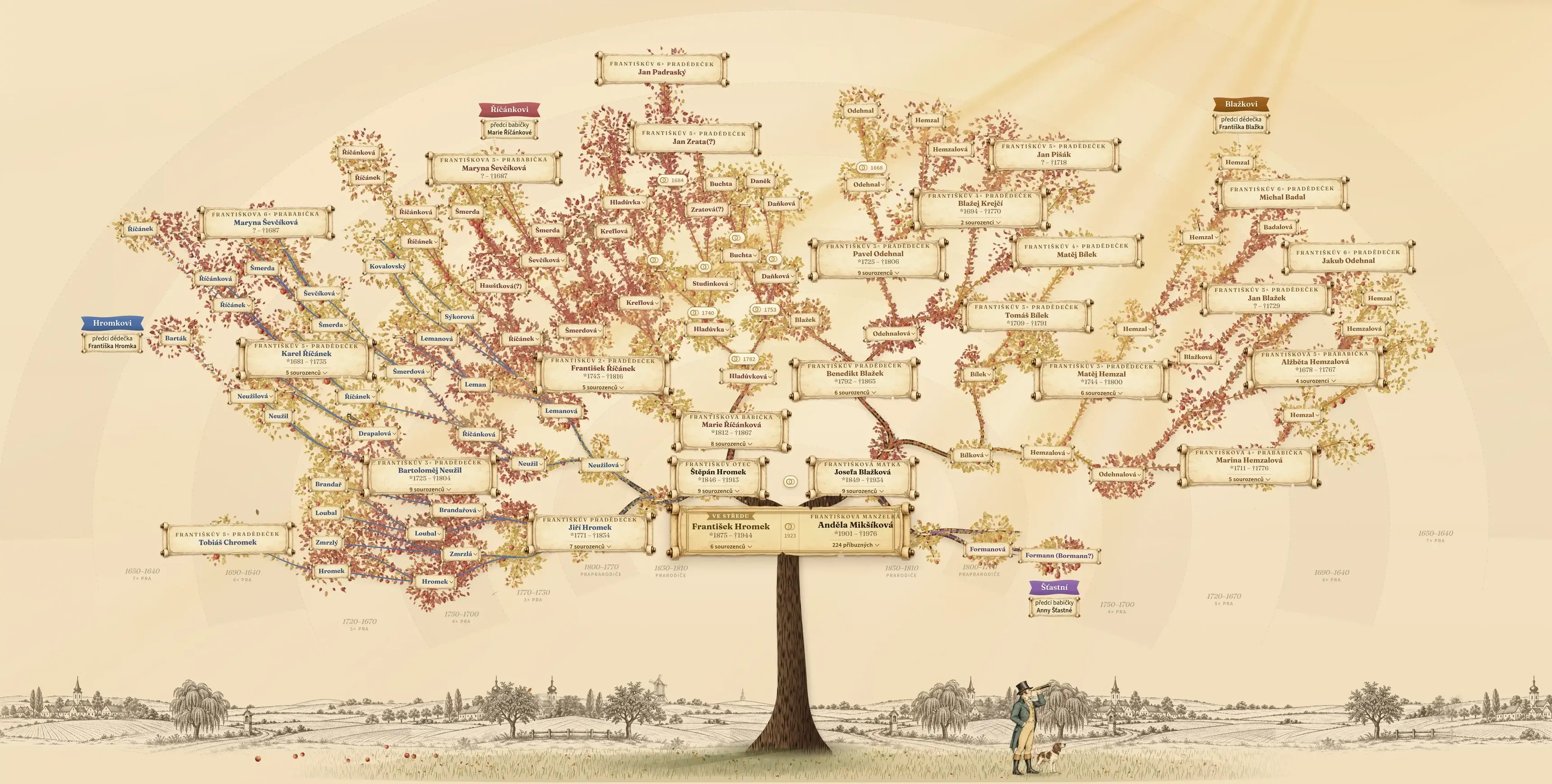
This is what your family tree will look like
The real Hromek family of Horákov: 763 people, ancestors back to 1630.
Your family in one place
-
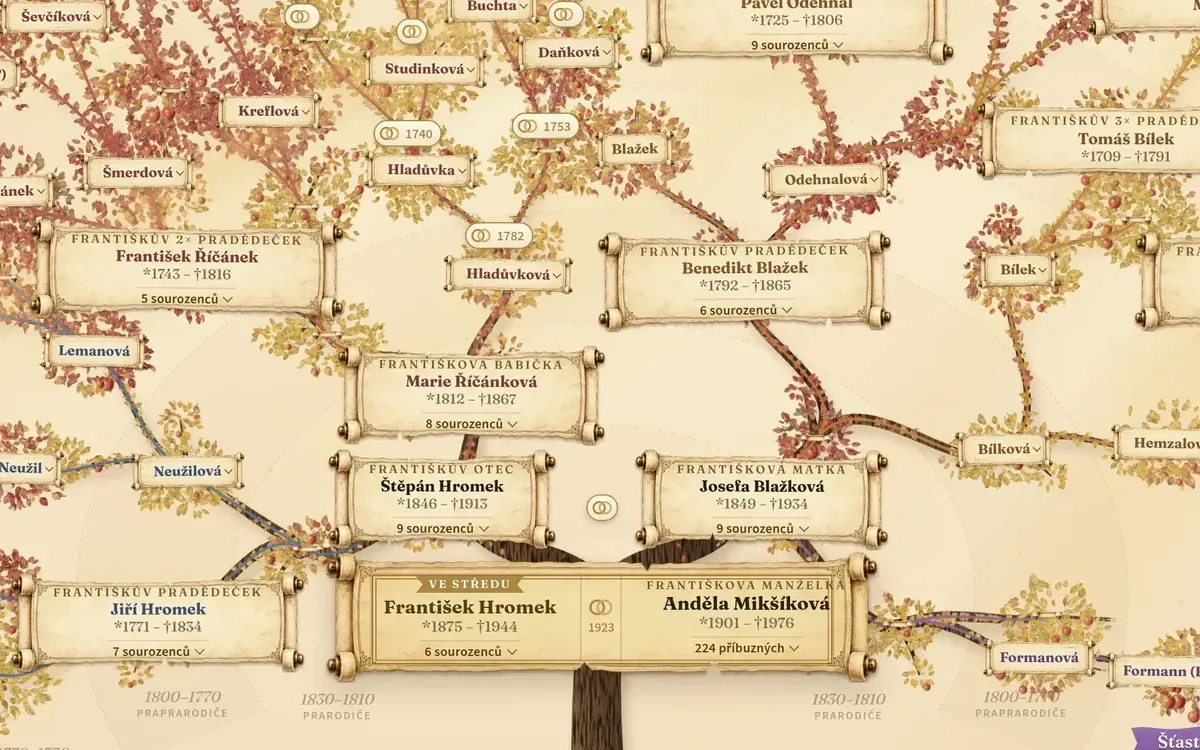 Your family tree
-
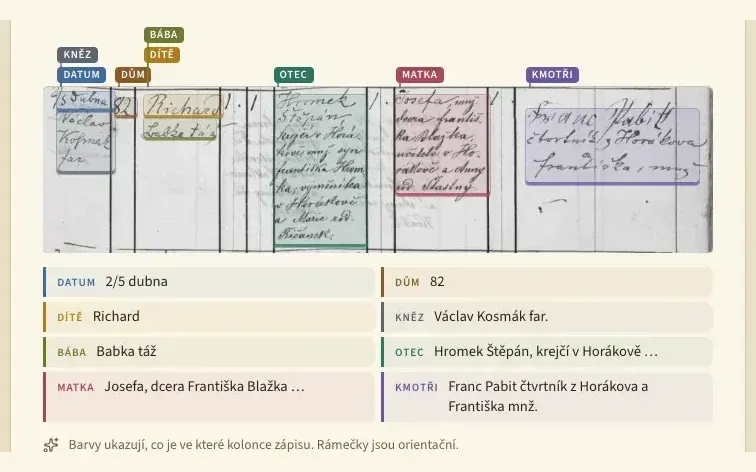 Old records, read for you
-
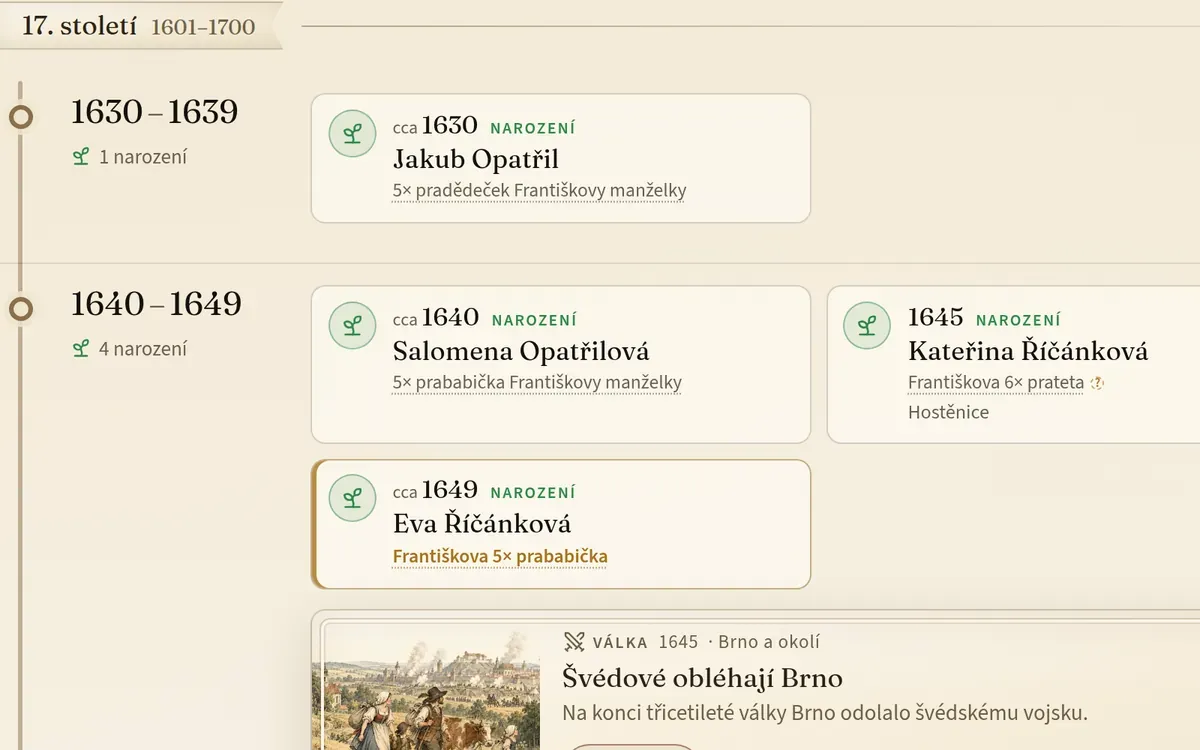 Ancestors in history
-
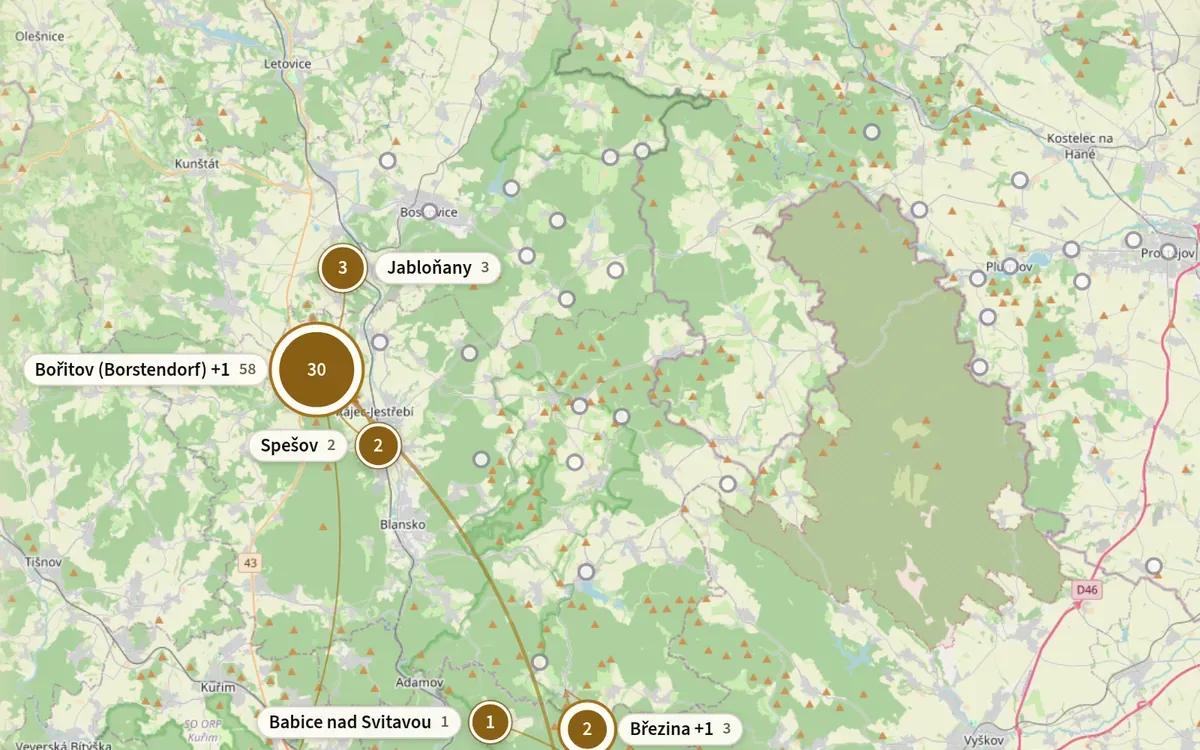 Where your ancestors lived
-
 Your ancestors' stories
-
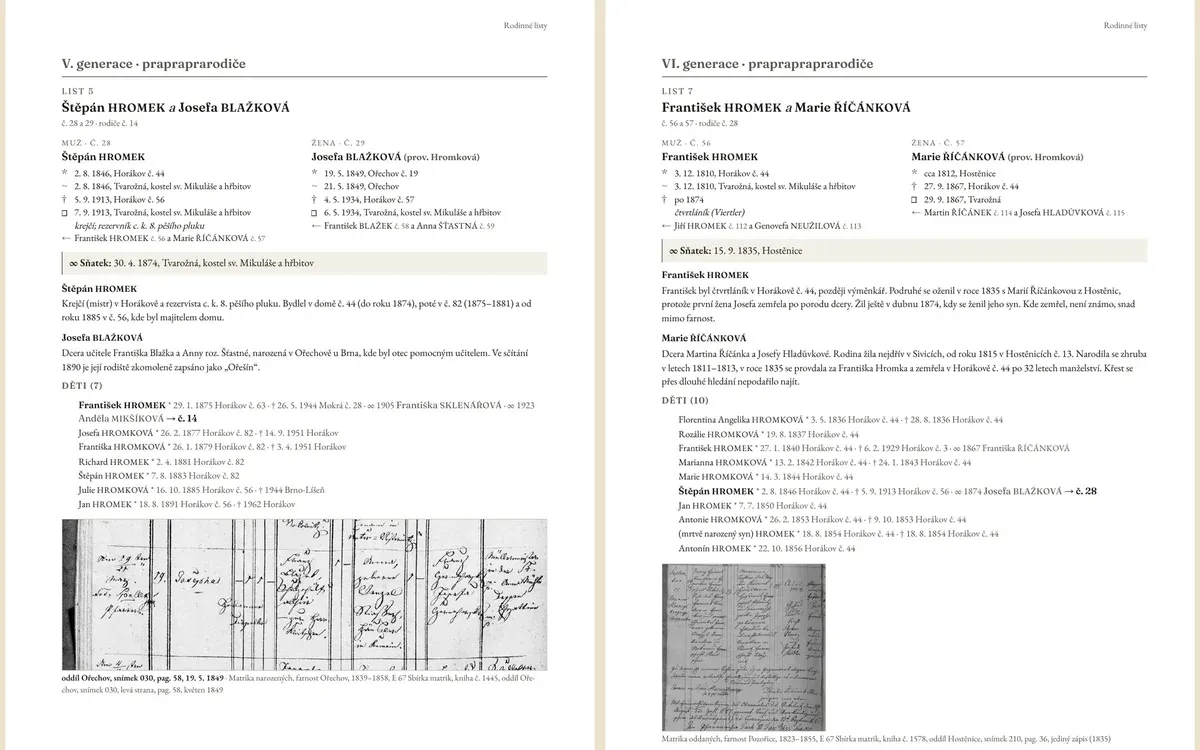 Family Book
II. How we read the registers
We read the registers. You discover.
- 1We find the record
- 2We read every field
- 3We link it into your tree
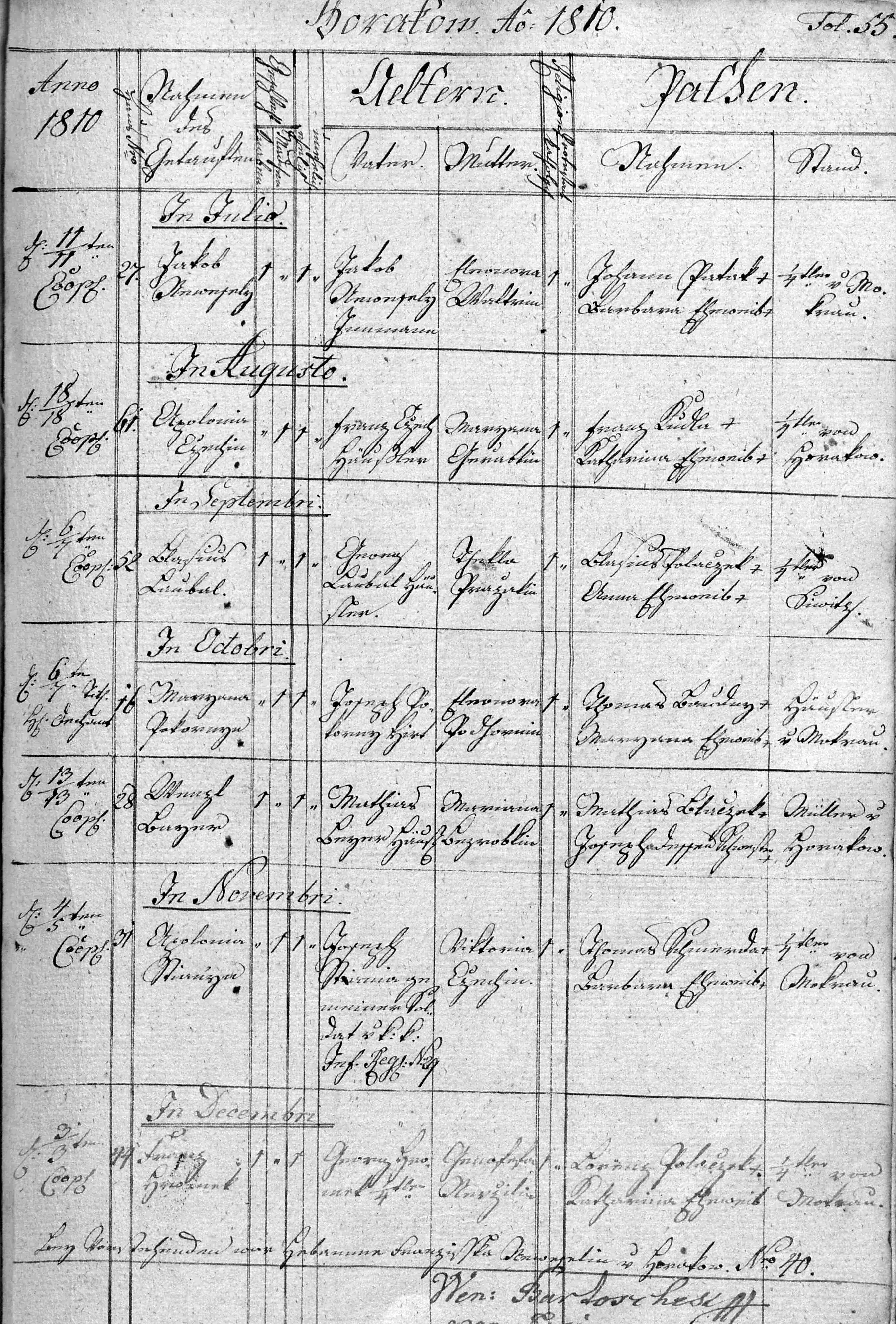
- date 3. Decembris · getauft 3. 3 December 1810, baptised the same day
- house 44 house no. 44
- child Franz Hromek Franz Hromek, a boy, born in wedlock
- father Georg Hromek, ¼ler father Georg Hromek, quarter farmer
- mother Genofefa Neužilin mother Genovefa, née Neužil
- godparents Lorenz Poláček + Katharina sein Weib · ¼ler von Mokrau godparents Lorenz Poláček and his wife Katharina, quarter farmers from Mokrá
- midwife Hebamme Franziska Krausin von Horakow N° 40 midwife Franziska Kraus from Horákov no. 40
From one record your tree gains:
- Franz Hromek · Georg Hromek, ¼ler · Genofefa Neužilin In the tree Franz gets his parents Georg and Genovefa. The tree grows a generation taller.
- 3. Decembris · getauft 3. On the timeline 3 December 1810, during the Napoleonic Wars, a year and a half after the Battle of Wagram.
- 44 · ¼ler von Mokrau On the map House no. 44 in Horákov. The godparents from Mokrá, the next village.
Checked by a person. The computer first read the mother's name as “Innocentia”. A researcher compared it with the marriage record and corrected it to Genovefa.
This is how it looks insideWe will read your ancestor's record too.
Ancestors' houses
The house they were born in, on the map of 1824–1843
The register gives the house number. We find the house on the imperial imprint of the stable cadastre and check the number on the indication sketch. This is how it looks for the real Hromek family of Horákov.
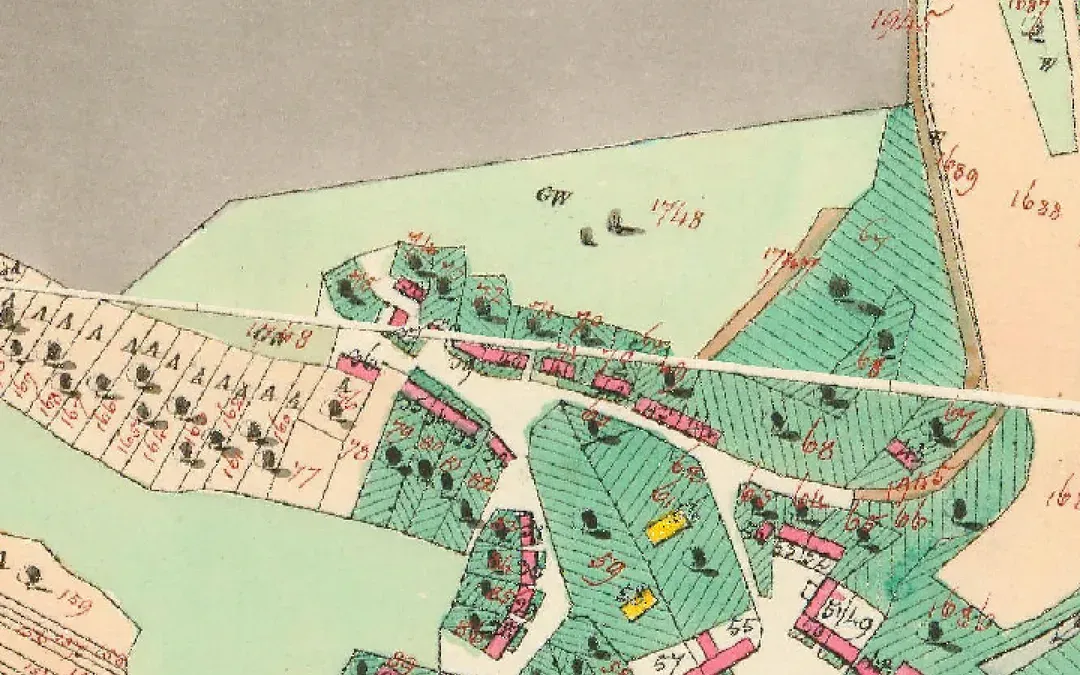 Today's house No. 44, to be checked
Horákov No. 44
František Hromek, later a quarter farmer, was born in house No. 44 in 1810.
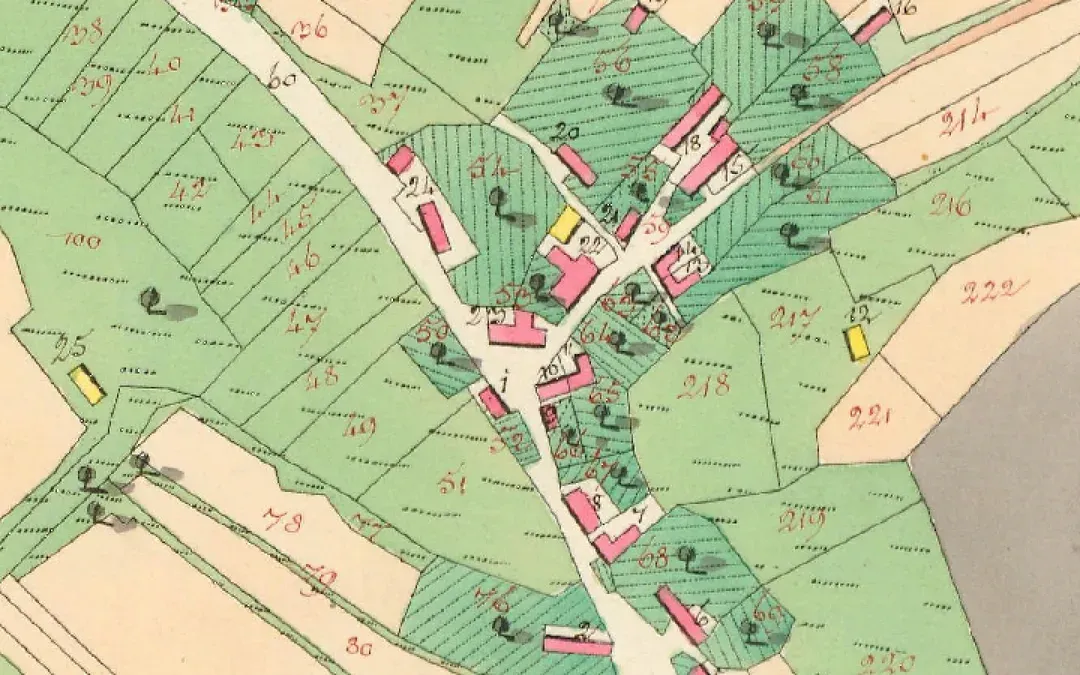 Hostěnice No. 13
number checked on the indication sketch
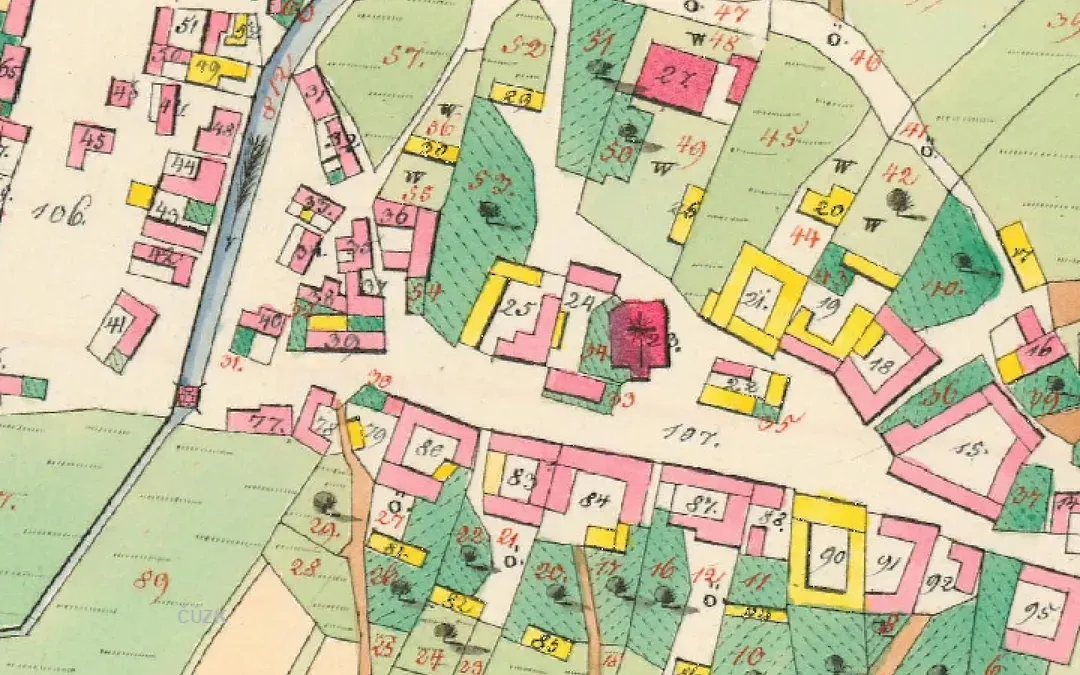 Žďárná No. 9
number checked on the indication sketch
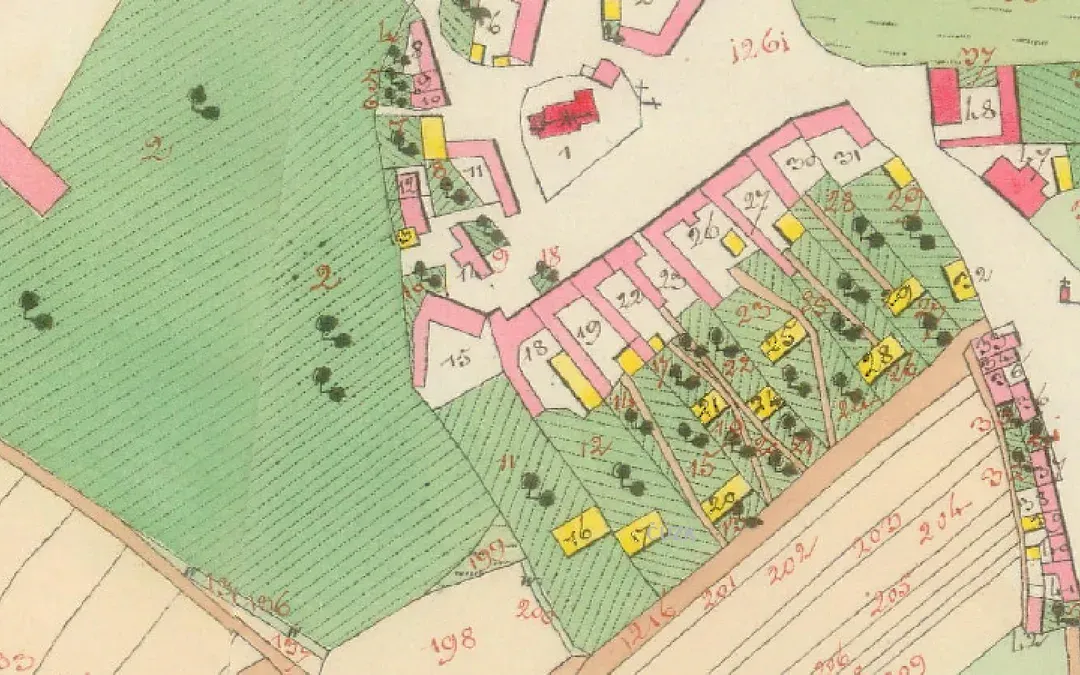 Krumsín No. 8
number checked on the indication sketch
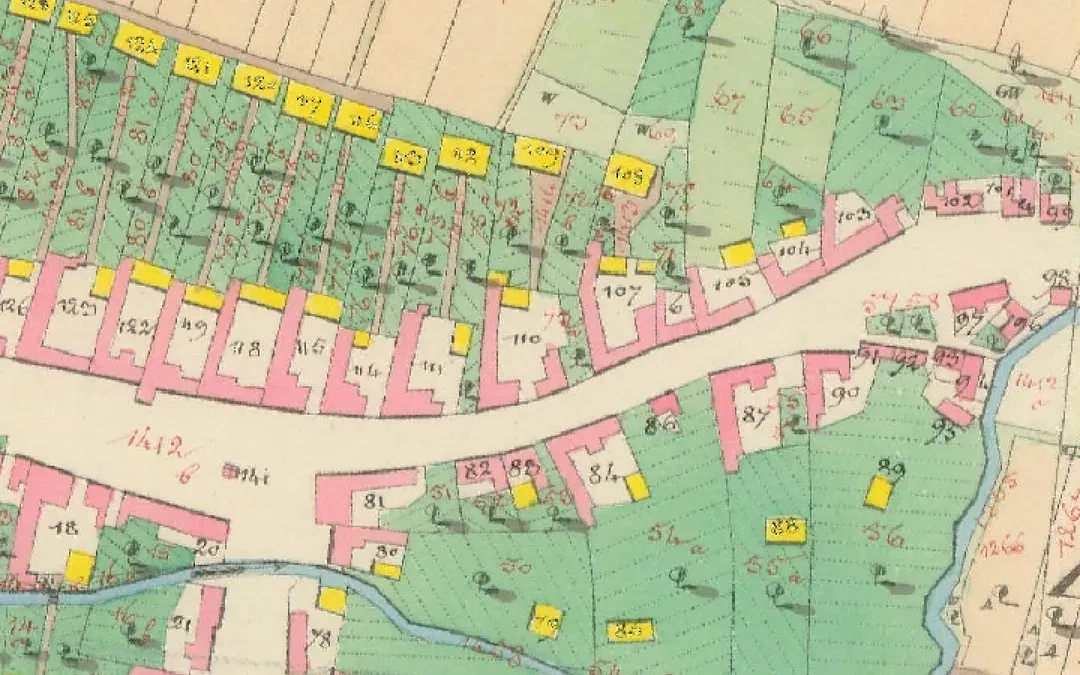 Lešany No. 7
number checked on the indication sketch
Central Archive of Surveying and Cadastre (Ústřední archiv zeměměřictví a katastru), imperial imprint. House numbers: indication sketches, Moravian Land Archive in Brno.

III. Three hundred years in a minute
Your ancestors in history
One minute of scrolling takes you through three hundred years of a family: who lived through forced labour, wars and the collective farm.
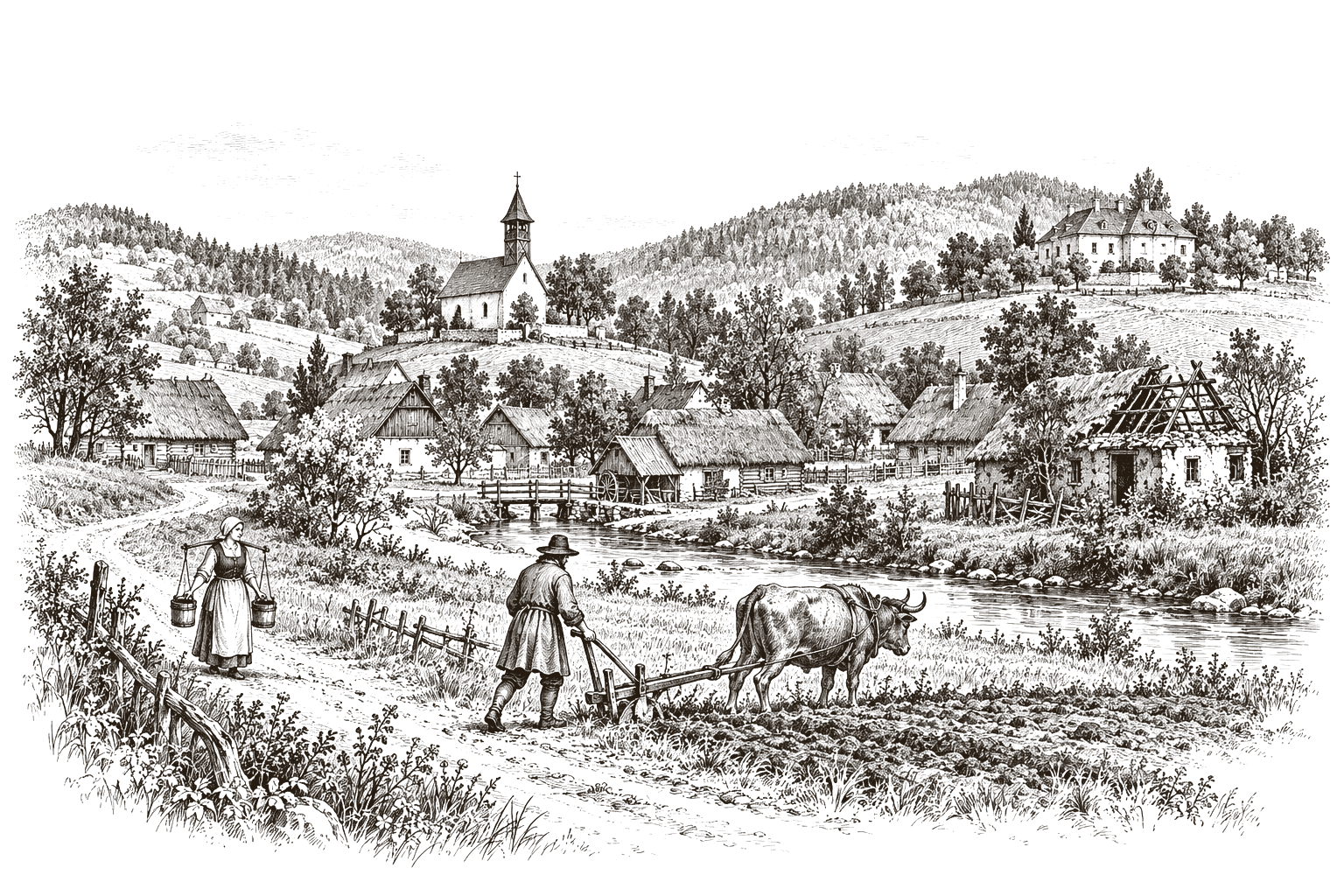
Jakub Hromek marries A wedding in the church at Tvarožná. The oldest record of the Hromeks.
Meanwhile in the world · 1680 Patent on forced labour After a peasant uprising in Bohemia, the state limited forced labour for the first time.
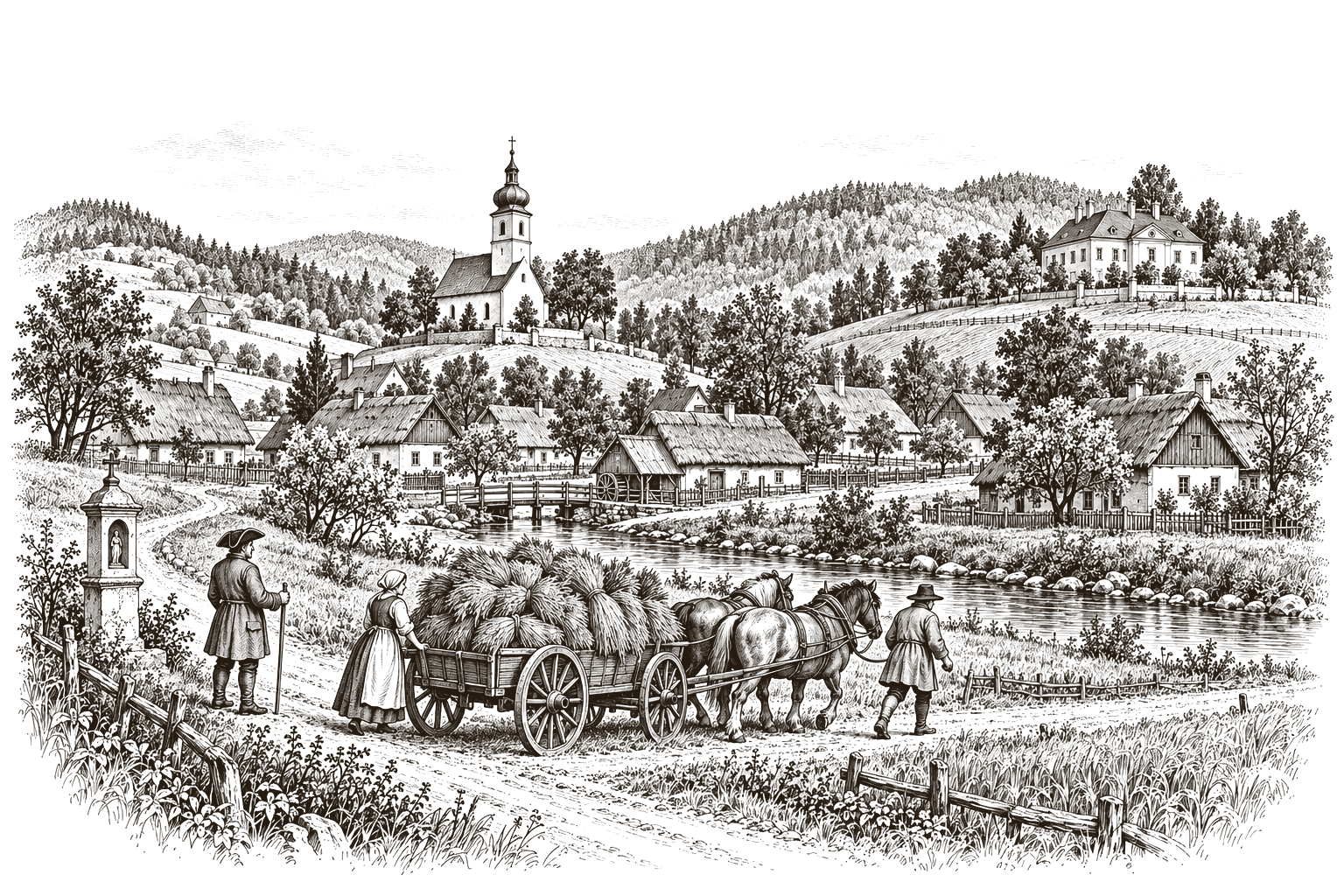
Michal buys farm no. 44 A quarter farm from the manor for 20 guilders. Two weeks later Jiří is born here.
Meanwhile in the world · 1770 Houses get numbers Houses were numbered for the first time during a census.
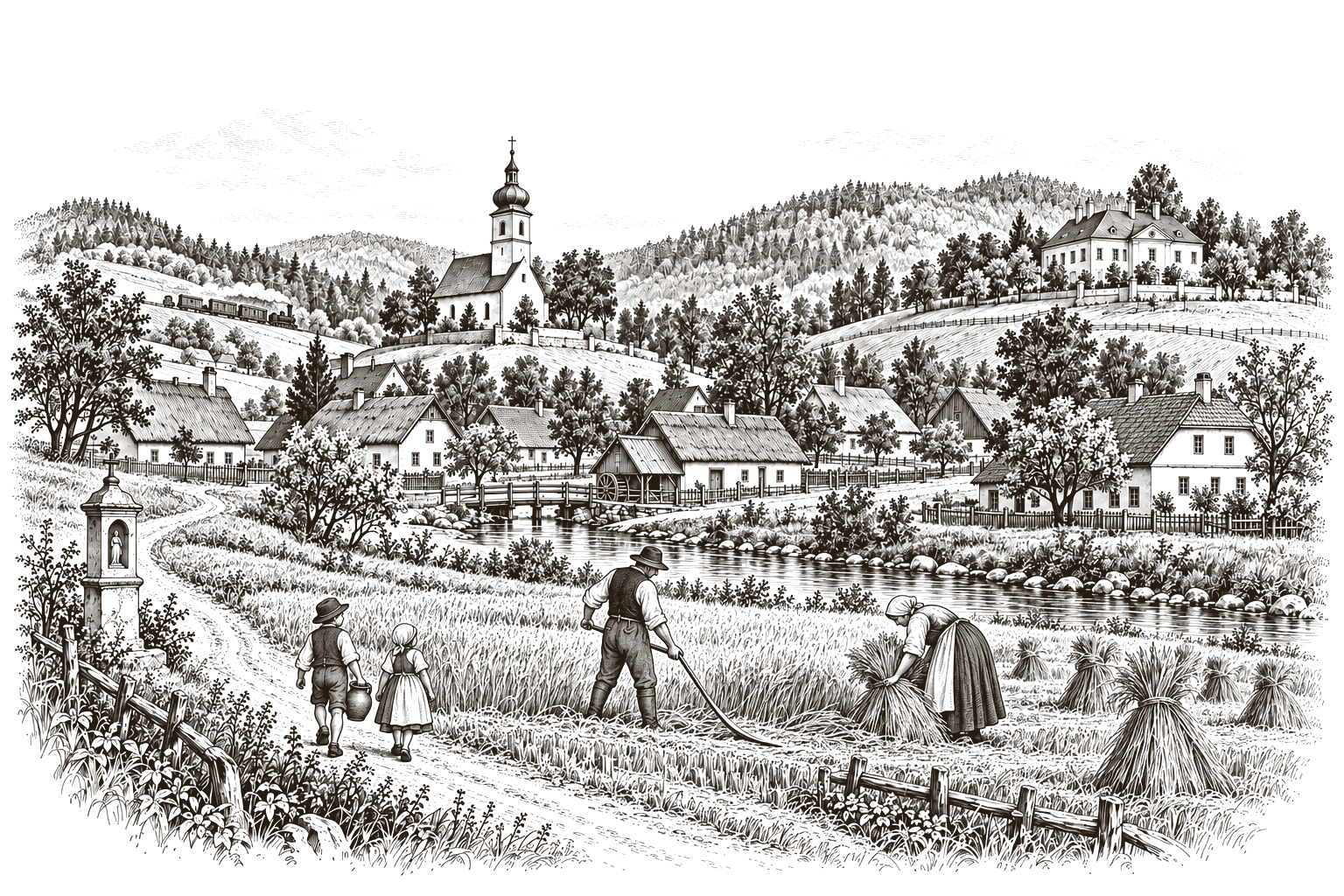
Štěpán is born Horákov no. 44. Father František, a quarter farmer.
Meanwhile in the world · 1848 End of forced labour A decree of 7 September abolished forced labour and serfdom.
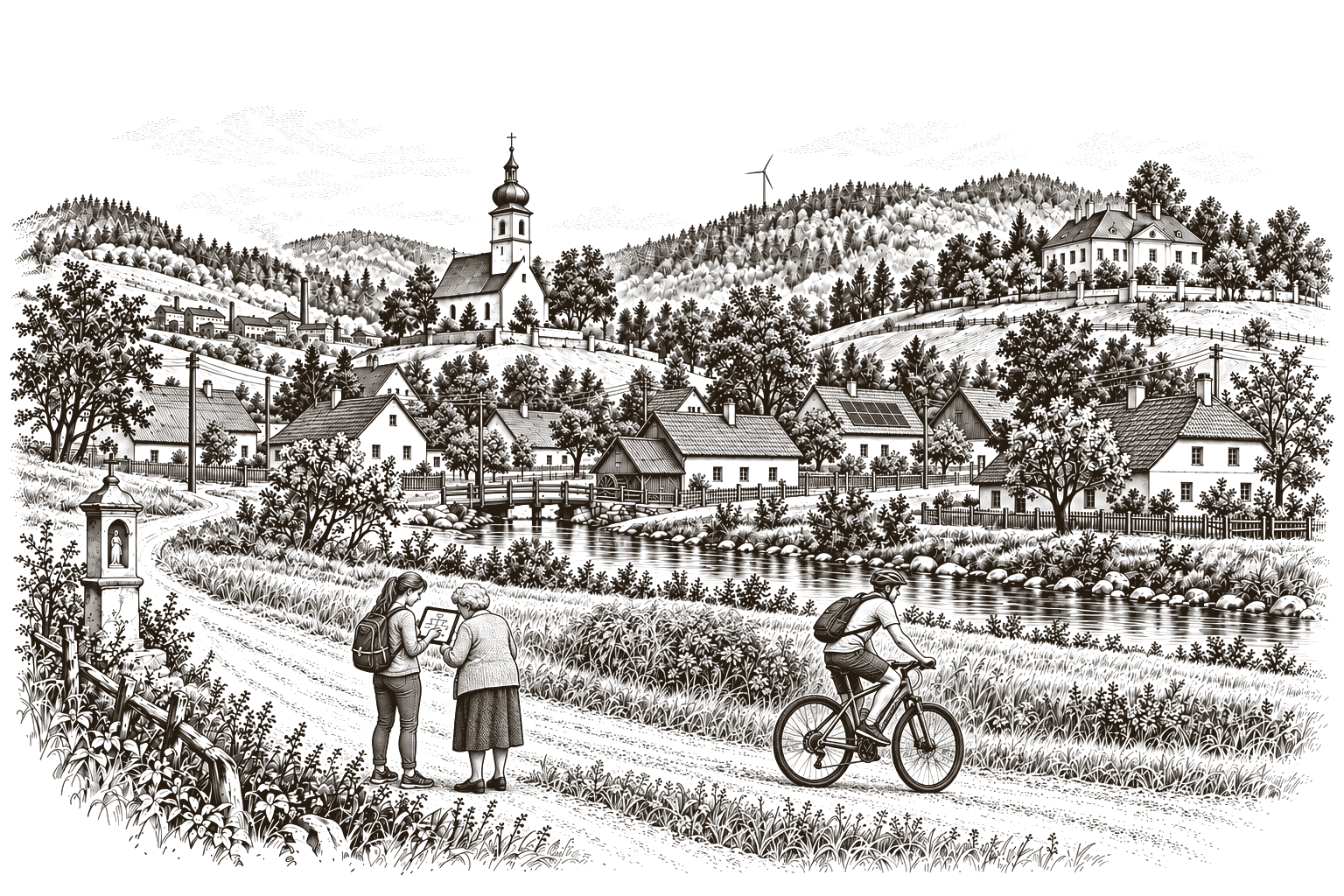
The family tree is public Anyone can browse it. Living people stay hidden.
Meanwhile in the world · 1989 Velvet Revolution The fall of the Communist regime, free elections and open borders.
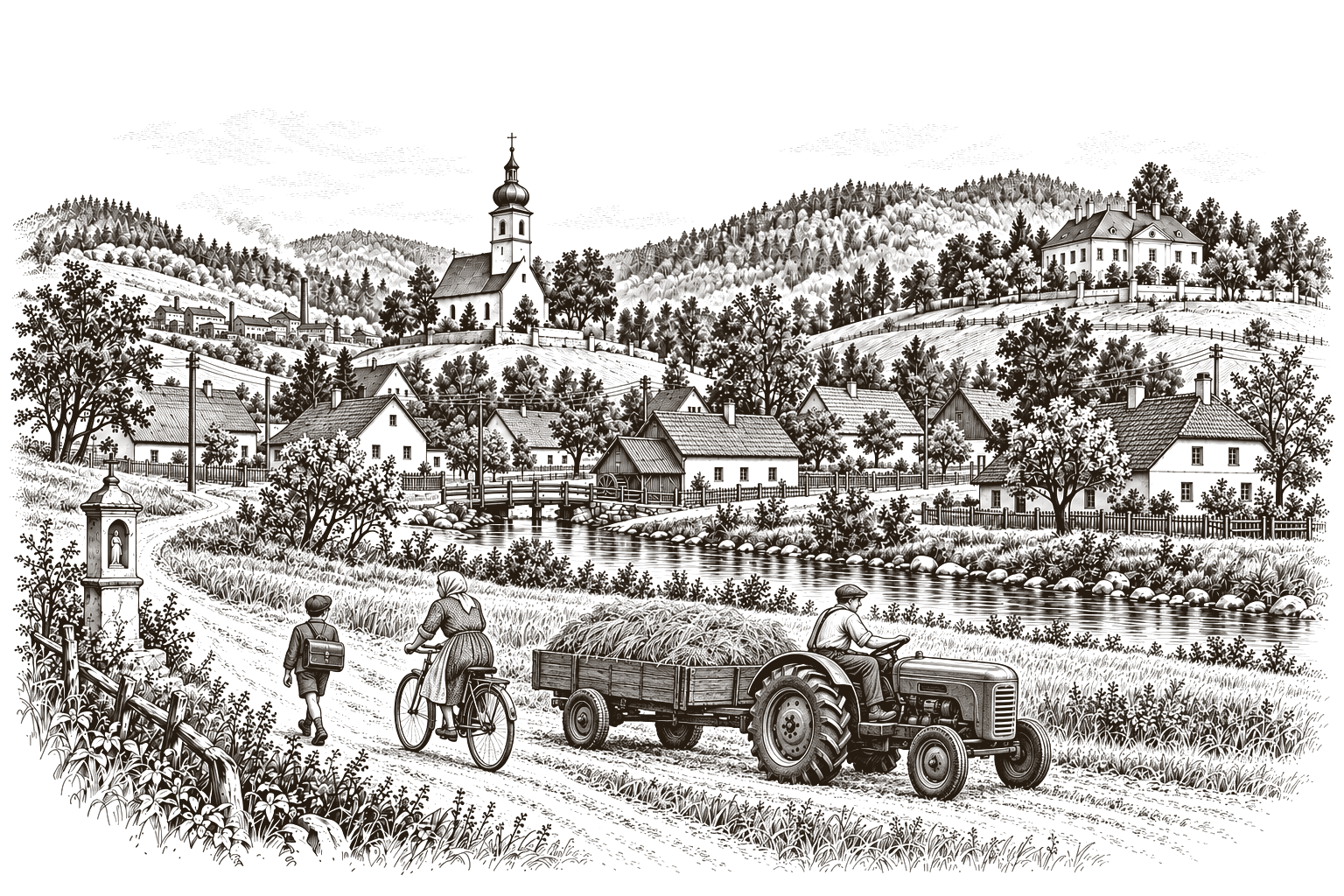
We look for the Hromeks of Horákov in the oldest registers.
The Hromek family
- 1694 Jakub Hromek marries A wedding in the church at Tvarožná. The oldest record of the Hromeks.
- 1700 Jakub holds half a farm The manor's survey lists him in Horákov with half a farm.
- 1734 Michal is born Horákov. Father Antonín, mother Marina.
- 1756 Michal marries Josefa Loubalová, in the church at Tvarožná.
- 1771 Michal buys farm no. 44 A quarter farm from the manor for 20 guilders. Two weeks later Jiří is born here.
- 1797 Jiří takes over the farm From his father Michal. He gives his parents a home for life.
- 1810 Jiří marries Genovefa The bride is from Mokrá. In December their son František is born.
- 1828 František takes over the farm He is seventeen. A month later he marries.
- 1846 Štěpán is born Horákov no. 44. Father František, a quarter farmer.
- 1857 Census Nine people live on farm no. 44.
- 1874 Štěpán marries A tailor and army reservist. The bride, Josefa Blažková, is from Ořechov.
- 1875 František is born Horákov no. 63. Father Štěpán, a tailor.
- 1890 A tailor at house no. 56 Štěpán is a master tailor and owns the house. His son František is an apprentice tailor.
- 1906 František sews in Mokrá A tailor at house no. 28, right next to Horákov.
- 1913 Štěpán dies At house no. 56, aged 67.
- 1923 František marries again A widower. The wedding with Anděla Mikšíková is in Křtiny.
- 1944 František dies Mokrá no. 28, aged 69.
- 2026 The family tree is public Anyone can browse it. Living people stay hidden.
Meanwhile in the world
- 1656 Moravian land registers The first big survey of farmsteads in Moravia, made for taxes.
- 1680 Patent on forced labour After a peasant uprising in Bohemia, the state limited forced labour for the first time.
- 1713 Last great plague The last great plague epidemic in the Czech lands.
- 1756 Seven Years' War Prussian and Austrian armies marched through the Czech lands again and again.
- 1770 Houses get numbers Houses were numbered for the first time during a census.
- 1781 Abolition of serfdom A decree of Joseph II: subjects may move and marry freely.
- 1784 Parish registers in state form Priests keep the parish registers in set columns.
- 1805 Battle of Austerlitz On 2 December the fighting reached right into the villages around Tvarožná.
- 1811 State bankruptcy Paper money lost four fifths of its value.
- 1816 Year without a summer A cold and rainy summer, failed harvests and high prices.
- 1831 First cholera A new disease from Asia kills within a few days.
- 1839 Regular train to Brno The Northern Railway linked Brno with Vienna.
- 1848 End of forced labour A decree of 7 September abolished forced labour and serfdom.
- 1866 Austro-Prussian War The Prussians occupied Brno, and cholera followed.
- 1914 First World War Men at the front, and at home requisitions and hunger.
- 1918 Birth of Czechoslovakia On 28 October 1918 Czechoslovak independence was declared.
- 1939 Occupation The Protectorate of Bohemia and Moravia.
- 1945 Liberation Fighting for Brno in April.
- 1949 Collectivisation Farmers must join the collective farm.
- 1989 Velvet Revolution The fall of the Communist regime, free elections and open borders.
Local history
What happened right where they lived
For every family we also look for local events that may have touched it.
-
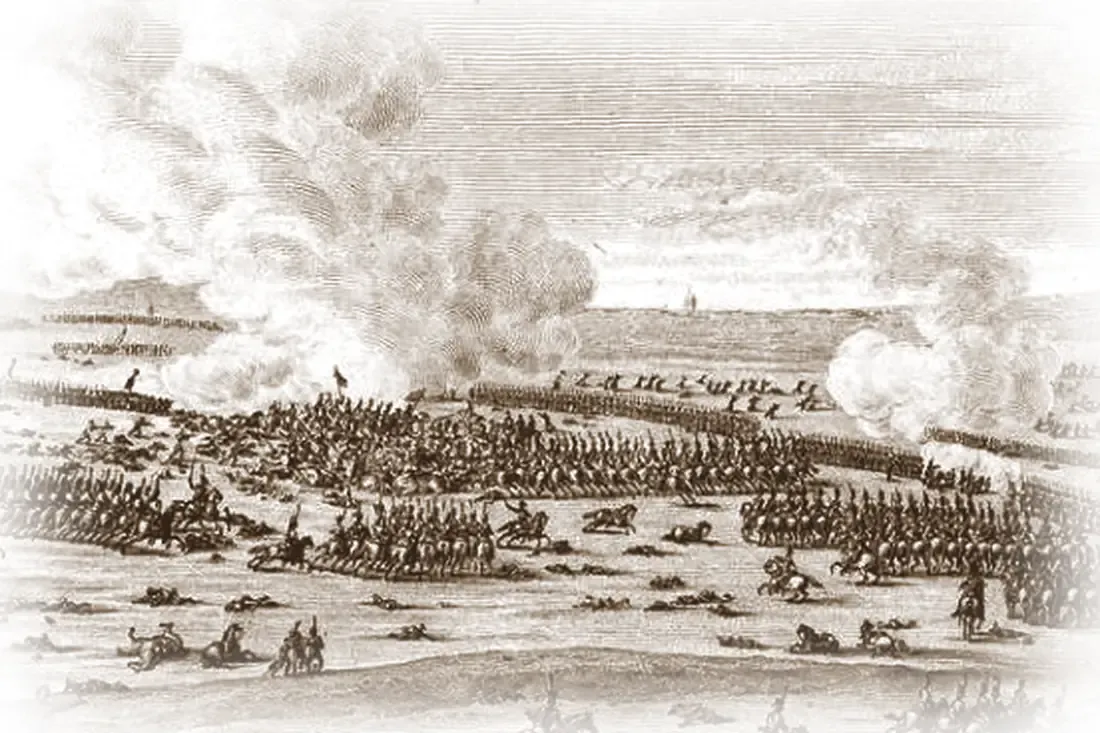
The Battle of Austerlitz, detail of a French engraving, 1806 · public domain 1805 · Tvarožná, kopec Santon
Tvarožná in the Battle of the Three Emperors
On 2 December 1805 the village of Tvarožná found itself right on the battle line.
-
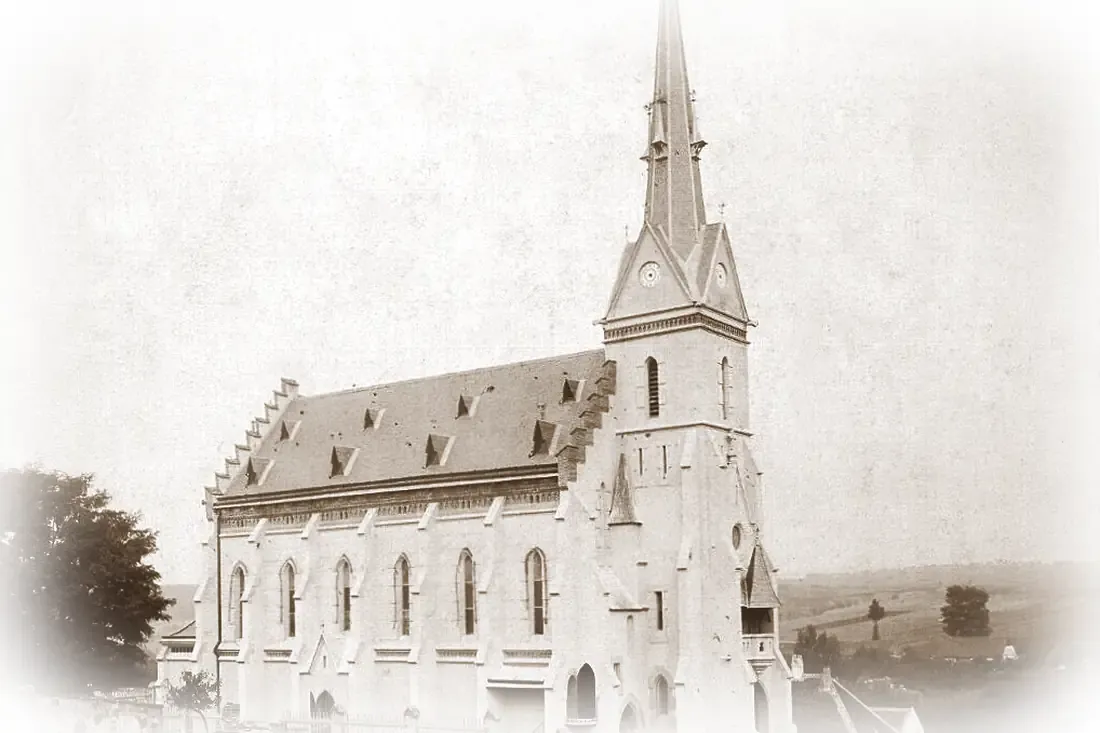
The new parish Church of Saint Nicholas in Tvarožná, photograph, around 1916 · public domain 1880 · Tvarožná
New church in Tvarožná
From 1880 to 1881 a new Church of Saint Nicholas was built in Tvarožná.
-
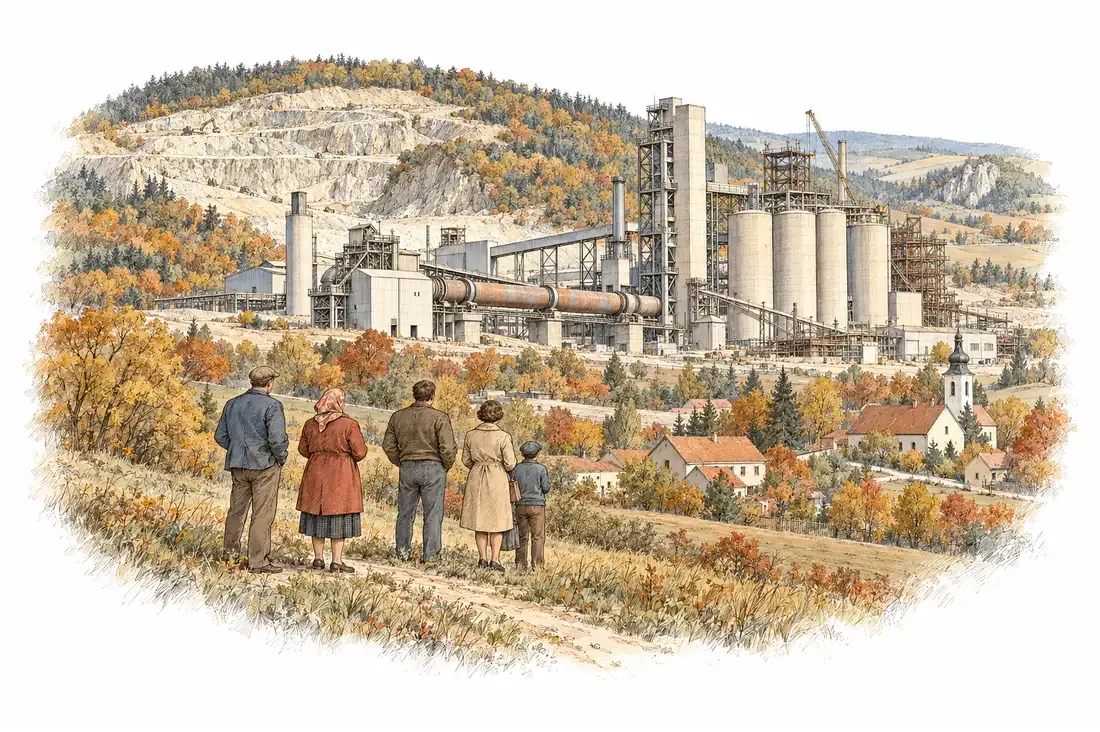
1968 · Mokrá-Horákov
Cement works in Mokrá
On 31 October 1968 the first kiln of the new cement works in Mokrá was lit.
On your family's timeline, next to your ancestors. From a catalogue of 192 events, each with a source.
IV. Map and farms
Where the family lived and where the brides came from
-
1771
Horákov no. 44 Michal Hromek, a wheelwright, bought the farm from the manor for 20 guilders.
-
1810
Mokrá no. 20 Jiří's bride Genovefa Neužilová came from here.
-
1835
Hostěnice František's bride Marie Říčánková came from here.
-
1849
Ořechov no. 19 Josefa Blažková, a teacher's daughter, was born here.
-
1874
Horákov no. 63 Josefa lived here when Štěpán the tailor married her.
-
1906
Mokrá no. 28 Their son František, also a tailor, lived here until his death in 1944.
The tree holds more: house numbers, 19th century maps and who farmed where.
V. Family Book
The history of your family. To keep and to print.
Leaf through the book of the Hromek family of Horákov (in Czech for now).

1 / 35 Turn pages with the arrows or by swiping. Tap a page to enlarge it.
A sample Family Book of the Hromek family, in Czech. You get a PDF to print yourself.
-
Family Book in PDF
tree, records and stories, for print and screen
-
A list of all ancestors
a clear spreadsheet
-
A tree you can take with you
for other genealogy services
File details
- PDF Family Book for printing, A4
- Excel one ancestor per row
- CSV the same data for any program
- GEDCOM for MyHeritage, Ancestry and other family tree programs
Claude and ChatGPT
Ask your assistant
Connect your family tree to Claude or ChatGPT through MCP. It answers only from your tree and says where it knows it from.
- connected through MCP, an open standard for assistants
- a register source with every answer
Question: Which of my ancestors was a tailor?
Moje historie · 763 people in the family searched
The tailor was Štěpán Hromek. He was born on 2 August 1846 in Horákov, house no. 44. He is recorded as a tailor at his wedding in 1874, and in the 1890 census as a master tailor who owned his house.
In 1874 he married Josefa Blažková from Ořechov, daughter of the assistant teacher František Blažek. Their son František also trained as a tailor.
Sources: registers of the Tvarožná parish 1846 and 1874, census Horákov 1890
How it works
You bring a name. We go through the registers.
From the first name to the whole family tree, usually within three weeks.
-
You: You enter one ancestor.
Day 1 Free sample
We: We try to find their record in the register, usually the same day, within a week at the latest.
-
You: Everything we found beyond that, you unlock in the app.
Right away Unlocking
We: We unlock it as soon as you pay by card.
-
You: In your family tree you choose the side of the family and how many ancestors at most, and pay by card.
Any time Search further
We: For everyone we do not find, we refund the money.
-
You: With grandma you fill in what you know and photograph documents.
Week 1 Questionnaire
We: We go through villages, names and old papers with you.
-
You: Nothing. You just read our reports on what we found.
Weeks 1 to 3 Research
We: We read the registers, record by record, and check every fact.
-
You: You invite your relatives.
Within 3 weeks Handover
We: We hand over the tree, the Family Book in PDF and all the data.

The first step is free and commits you to nothing.
Reviews
What our customers wrote
Only customers who received a result from us can write a review. We publish them with their consent, unchanged.
Why trust us
First you see, then you decide
-
The result before any payment
You see your ancestor's record from the register for free. Only then do you decide.
-
A source for every fact
Archive, book and page. Anyone can check the record.
MZA Brno, E 67, book no. 1983, fol. 55
-
Tested on our own family
The service was built on the family of one of the founders: 970 people, 1 497 register records.
-
A real company
PunkHive s.r.o., Olomouc, Czech Republic, company ID 21152195.
Who is behind it
VI. Pricing
You pay only for ancestors we find
You start for free. What we found beyond that you unlock for $25 (€22), and every further ancestor we find costs $9 (€8).
-
1. Try
Free sample
Free
We find your ancestor's record in a parish register, read it to you and show you their parents, often the grandparents too. Result usually the same day, within a week at the latest.
usually 7 ancestors
- We search parish registers from Bohemia, Moravia and Silesia.
- An ancestor born in 1920 or earlier.
-
2. Unlock
Everything we found
$25 (€22)
The ancestors we found beyond the sample you unlock right away. Then the tree is yours: invite your family and download the Family Book.
We also look up your direct ancestors' houses where the records allow.
usually 3 to 8 ancestors, about $3 to $8 (€3 to €7) per ancestor
Unlock -
3. Search further
More ancestors
$9 (€8) per ancestor
You tell us which side of the family to search and how many ancestors at most. For everyone we do not find, we refund $9 (€8).
- up to 5 ancestors
- at most $45 (€40)
- up to 10 ancestors
- at most $90 (€80)
- up to 30 ancestors, say grandma's whole family
- at most $270 (€240)
- up to 60 ancestors, your father's or mother's whole family
- at most $540 (€480)
always $9 (€8) per ancestor we find
Search furtherYou unlock and search inside your family tree. No tree yet? Start with the free sample.
Gift voucher
Give your parents their ancestors
Enter a name and see what the voucher will look like.
Free sample
Start with one ancestor
Tell us what you know about them: a name, a year and a village. We will try to find their record in the register and show it to you.
Want a quote right away? Ask for a quote or write to info@mojehistorie.cz
Common questions
What people ask
What is the difference between unlocking and searching further?
Unlocking is a finished result: the ancestors we found beyond the free sample appear locked and you unlock them all right away for $25 (€22). Then the tree is yours. We do not search for more ancestors, only for the houses of the direct ancestors already in your tree. Searching further is new work in the registers: $9 (€8) for every ancestor we find, and it takes 5 to 10 ancestors usually within a week, larger searches within two to three weeks.
What do you need from us?
The name of the oldest ancestor your family knows, and one event with a year and a village: a birth, a wedding or a death. For women also the maiden name, if you know it. Parents' names, birth or marriage certificates, obituaries or a family bible all help. The rest your family fills in a questionnaire we send.
How far back can you go?
From 1784 on, the registers have columns and name the parents. There we look for every ancestor and usually find 90 to 100 %. In older books, from 1784 back to 1650, we usually find 65 to 80 % of ancestors in Moravia and 45 to 70 % in Bohemia and Silesia. Single lines often reach the 1600s, and through lists of farmers back to the years after the Thirty Years' War. In our own family we reached the year 1630.
What does the computer do and what does a person do?
The computer leafs through thousands of register images, finds your ancestors' records, reads them (Latin, German and old handwriting included) and puts them into plain English. But every link between parents and children in the direct line is checked by a person over the record itself. For every fact you see where it comes from and how certain it is.
What about privacy?
Your family tree in Moje historie is behind a sign-in and only the people you invite can see it. We never publish anything about living people. The samples on this site come from the public part of the Hromek family tree: only ancestors born before 1910 who have died. The data is yours: you get it as a GEDCOM file and we delete it on request.